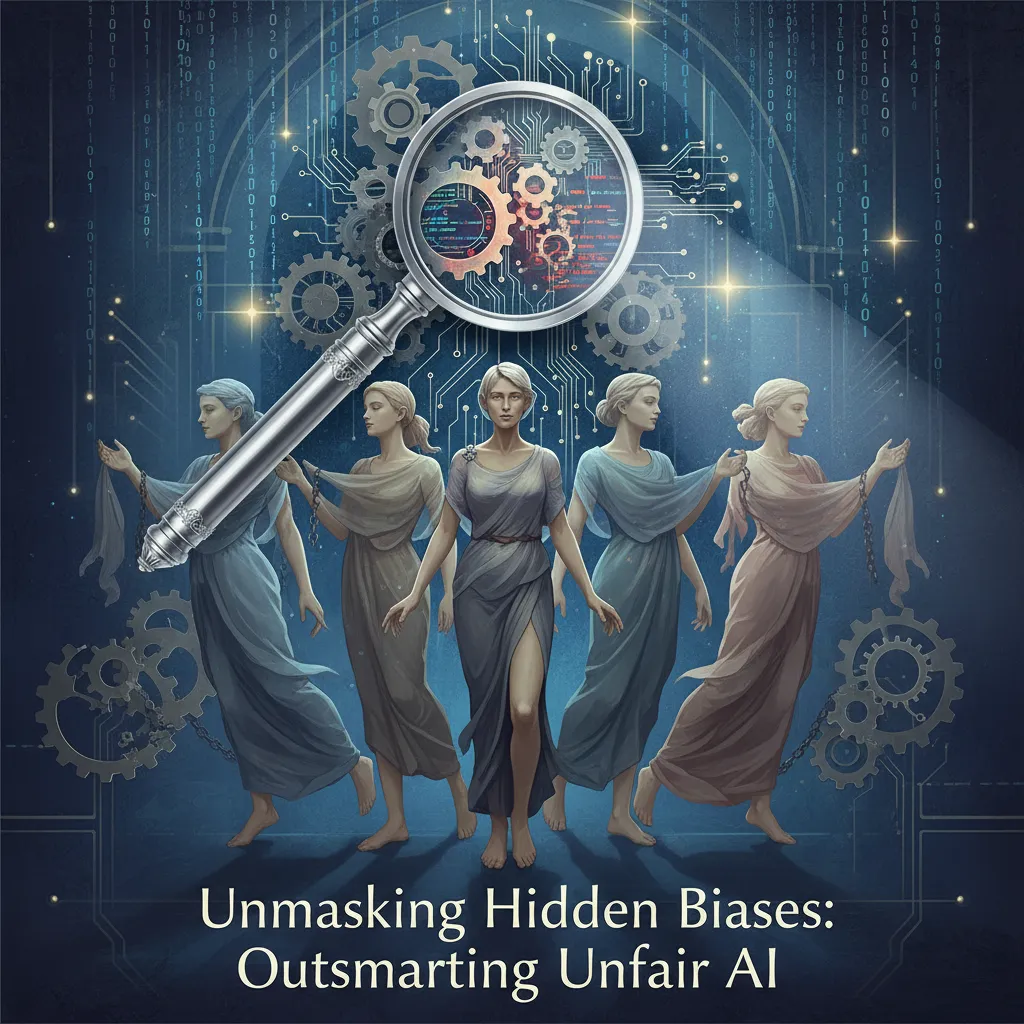

Last week, after my elderly neighbor nearly deleted her own photo album thanks to a mysterious digital assistant misfire, I started wondering—with all their magic and mystery, can we really trust AI? It's not just her; business leaders, students, and even my dog-walking group are quietly (or not-so-quietly) skeptical. In a world where AI is learning our routines, scanning our emails, and sometimes deciding if we get a loan, isn't it high time we demanded more than 'just trust me' from these black boxes?
The Trust Mismatch: When People Use AI, But Don't Trust It
When I first started using AI tools in my daily work, I was amazed by how quickly they could sort through data, draft emails, or even suggest blog topics. But even as I grew more reliant on these systems, I couldn’t shake a nagging sense of doubt. Was the AI really getting things right? Or was I just getting used to double-checking its work? It turns out, I’m not alone. Recent survey highlights show a striking gap between how often people use AI and how much they actually trust it.
Public Confidence in AI: The Numbers Tell the Story
Let’s look at the data. According to a recent global survey, 66% of people use AI regularly. That’s a huge portion of the population, considering how new these technologies are in our daily lives. But here’s the catch: only 46% of regular users say they actually trust AI. That’s a 20-point gap between usage and trust—a trust mismatch that’s hard to ignore.
Why does this gap exist? I think it comes down to how people view AI in their own lives. We love the convenience, but we’re not ready to hand over the keys just yet. For example, my accountant uses an AI tool to sort receipts and categorize expenses. It saves her hours every month. But she always double-checks the results. As she puts it, “One wrong zero and it’s tax trouble!” This is a perfect example of how trust in AI is still a work in progress, even among people who use it every day.
Trust in AI: A Global Patchwork
Trust in AI isn’t the same everywhere. In fact, it swings wildly depending on where you live. Recent survey highlights show that in China, a staggering 83% of people trust AI. In Indonesia, it’s almost as high at 80%. But in the United States, only 39% of people say they trust AI. In Canada, the number is just 40%.
These numbers show that public confidence in AI is far from universal. In fact, the AI trust gap is especially big in Western nations. People in the US and Canada, for example, are much more skeptical than their counterparts in Asia. This could be due to cultural differences, media coverage, or simply how transparent AI systems are in each country.
Regular Users: The Most Skeptical Group?
One of the most interesting findings is that regular users of AI are often the most skeptical. You’d think that using AI every day would build trust. But in reality, it often makes people more aware of its flaws and limitations. Daily experiences with AI—whether it’s a banking app, a smart home device, or a chatbot—bring both convenience and suspicion. We see the benefits, but we also notice when things go wrong.
In short, the trust mismatch is real. People are using AI more than ever, but their trust in AI isn’t keeping up. This gap is a crucial challenge for anyone who cares about AI trustworthiness and the future of technology in our lives.
Explainability: The Missing Link (And Why We Need It Now)
When I talk to people about AI, one concern comes up again and again: the “black box” effect. Most of us are uneasy about trusting a system that can’t explain itself. If an AI makes a decision—say, denying a loan or swerving a self-driving car—shouldn’t we have the right to know why? This is where AI transparency and Explainable AI become absolutely critical.
Without explainability, AI systems feel mysterious and unpredictable. It’s like getting a decision from a judge who refuses to share the reasoning behind their verdict. For many, this lack of clarity is the number one reason they hesitate to embrace AI in their work or daily lives. We need more than just results; we need to see the logic behind those results. In other words, we need a “receipt” for every decision an AI makes.
Why Explainability Matters for Trust and Accountability
Explainable AI doesn’t just satisfy curiosity—it’s the foundation of responsible AI frameworks and AI governance. When users can see and understand how an AI system arrives at its decisions, trust grows. This transparency is essential for accountability. If something goes wrong, we need to trace the steps, audit the process, and fix the issue. Without explainability, we’re left guessing—and that’s a recipe for skepticism and risk.
“Nobody likes a black box—especially not when their livelihood or safety is on the line.”
Imagine a scenario: your AI-powered car suddenly swerves on the highway. Would you trust it again without knowing exactly why it made that move? Probably not. This is why transparency and accountability in AI aren’t just nice-to-haves—they’re non-negotiable.
Governance, Oversight, and Real-World Impact
Organizations that prioritize AI governance and formal oversight see real benefits. Professional firms with strong oversight report higher ROI from their AI systems and experience fewer incidents. This isn’t just theory; it’s backed by industry data. When companies build explainability into their AI, they reduce risk, improve user confidence, and create systems that are easier to audit and evaluate.
Transparency means users can see how decisions are made.
Accountability means organizations can answer for those decisions.
AI auditing and evaluation become possible only when the logic is visible.
Industry Progress: Benchmarks and Frameworks
Until recently, standardized evaluation frameworks for AI safety lagged behind the pace of industry deployment. But that’s changing. New benchmarks like HELM Safety, AIR-Bench, and FACTS are being developed to assess AI safety, accuracy, and explainability. These tools help organizations measure and improve their systems, but they work best when explainability is built in from the start.
Ultimately, explainability is the missing link that connects AI transparency, responsible AI frameworks, and effective AI governance. Without it, trust stalls, and incidents—whether accidental, ethical, or otherwise—become more likely. With it, we move closer to truly trustworthy, accountable AI.
Wild Cards: News, Mishaps, and the Skeptical Spirit
As I’ve watched the AI landscape evolve, one thing is clear: the headlines are getting wilder, and the stakes are getting higher. News of AI mishaps—ranging from harmless glitches to serious accidents—seems to surface almost daily. In fact, the rate of AI-related incidents and near-misses has risen sharply in recent years. Yet, despite this, most companies still lack robust trust evaluation benchmarks and transparency practices for AI. It’s a bit like launching a new medicine without proper trials or labels. No wonder the public is uneasy.
According to recent data, almost 90% of AI models in 2024 are developed by private industry. This shift magnifies the need for strong AI regulation governance, as private companies may not always prioritize transparency or user safety. The global conversation is changing: organizations and everyday users alike are pushing for standard-setting, auditing, and international regulation. It’s not just about being excited for what AI can do—it’s about making sure we can trust how it does it.
Public demand for transparency is growing louder. People want “nutrition labels” for algorithms—clear, understandable disclosures about how AI systems work, what data they use, and what risks they might pose. Frameworks like ISO/IEC 42001 and the NIST Risk Management Framework (RMF) are leading the way in setting these standards. But for now, the reality is that AI adoption challenges remain, and many organizations are still playing catch-up when it comes to explainability and responsible deployment.
AI misinformation concerns are also top of mind. With so many models operating as black boxes, it’s easy for errors to slip through—or for bad actors to exploit the lack of transparency. I’ve even experienced a small-scale mishap myself: an AI handwriting recognition tool once misread my note and sent a heartfelt message meant for my brother straight to my dentist. While this was more amusing than harmful, it’s a reminder that even simple errors can have unintended consequences.
Globally, a sizable portion of the public is uneasy about rapid AI adoption. Surveys show that a median of 34% are more concerned than excited about AI, while 42% feel both concerned and excited. This skepticism isn’t anti-progress—it’s a healthy response to a technology that’s moving faster than our ability to regulate or fully understand it. In fact, skepticism is essential for protecting users and encouraging better design. It pushes us to ask hard questions, demand better transparency practices in AI, and insist on trust evaluation benchmarks that actually mean something.
In conclusion, as we crack open the black box of AI, we need to embrace the skeptical spirit. Mishaps and wild cards will continue to surface, but they also drive us toward smarter, safer, and more transparent AI systems. Trustworthy AI isn’t just about technical excellence—it’s about openness, accountability, and the willingness to double-check, even when the algorithm says it’s right. The future of AI depends on our ability to balance innovation with responsibility, and that starts with asking tough questions and demanding clear answers.