
Image Classification for Beginners: A Custom Classifier Guide
Confession time: I used to think training an image classifier was sorcery meant for PhDs with NASA-level laptops. That was before I set myself a challenge—finish a small project in machine learning, cap it at 100 lines of code, and see if I could make something actually work. Spoiler: The process was way less intimidating (and weirder) than I expected. If you’ve ever wondered how computers learn to spot cats in pictures or why so many AI demos involve bananas, this guide is for you.Why Only 100 Lines?—Constraints Spark CreativityWhen I set out to write this Beginner Tutorial on image classification, I gave myself a strict rule: no more than 100 lines of code. At first, it sounded like a gimmick. But this self-imposed limit became the most powerful tool in my Classification Guide. Why? Because constraints force you to focus, learn, and create in ways you never expect.Let me share a quick story. My first attempt at building an image classifier was, frankly, a mess. I copied bits from open-source tutorials, added “just one more” feature, and before I knew it, my codebase was a tangled jungle. Debugging was a nightmare, and I barely understood what each part did. So, I scrapped everything and started over, determined to fit the whole project into 100 lines. Suddenly, every line mattered. I had to decide what was truly essential to image classification—and what was just noise.This constraint did more than just tidy up my code. It cut through the analysis paralysis that plagues so many machine learning beginners. With a hard limit, I couldn’t endlessly tweak or overthink. I had to build a minimum viable model, which made each step in the process clear and manageable. Debugging became almost enjoyable, since there were fewer places for bugs to hide.Clarity: Limiting code length keeps things simple for beginners.Focus: Constraints highlight the core steps of any Classification Guide.Retention: Research shows we learn better when forced to make tough choices.Many tutorials sprawl into confusion, but a 100-line cap brings sharpness and confidence. In image classification, less really can be more—especially when you’re just starting out.Data Preparation: Herding Cats (and Dogs, and Bananas)Let’s talk about the unsung hero of image classification: dataset preparation. Before I wrote a single line of code, I needed a training dataset. But here’s the surprise—training images don’t have to number in the thousands. I started with just 40 images (20 per class), and with smart data preprocessing and augmentation, I reached up to 94% accuracy. That’s right: a small, well-augmented dataset can work wonders for custom image classifiers.What’s in a Dataset?My first step was scrounging up images of cats, dogs, and, for fun, bananas. Don’t overthink it—phone photos, web downloads, or even doodles can work. The key is variety: different angles, lighting, and backgrounds. Even with just 20 images per class, diversity matters more than quantity.Data Preprocessing: The Documentary Nobody WantsOnce collected, every image went through a data preprocessing bootcamp:Resizing – Standardizing image size (like 128x128 pixels) keeps the training process smooth.Normalizing – Scaling pixel values (usually between 0 and 1) helps the model learn faster.Augmenting – I “flipped” images horizontally, rotated them, and tweaked brightness. This multiplies my dataset without new photos.Splitting the DatasetIt’s tempting to throw all images into training, but I always split them into training, validation, and test sets. Skipping this is a classic beginner mistake—without it, you can’t trust your accuracy numbers.Wild Card: Imaginary Lemon DetectorIf I wanted to train a classifier to spot weird lemons, I’d gather photos of lemons in all shapes, colors, and settings. The more “weird” examples, the better the classifier would learn. It’s all about capturing the quirks in your training dataset.Model in a Nutshell: The Simplest (Useful) Neural Network That WorksLet’s cut through the jargon: when it comes to image classification, a Convolutional Neural Network (CNN) is your best friend. CNNs are the backbone of most practical image classifiers, and the good news is, you don’t need a PhD or a supercomputer to build a useful one. For small classification tasks, a simple neural network model—just a few convolution and pooling layers—can work wonders.Here’s the basic recipe I use for a custom classifier:Convolutional layers: These act as the eyes of your model, scanning the image for patterns like edges and shapes.Pooling layers: They help the model focus on the most important features and reduce the size of the data, making training faster.Fully connected (Dense) layer: This is where the model decides which class your image belongs to—your classes, not someone else’s.When I say “custom classifier,” I simply mean a model trained to recognize your categories—be it cats, cars, or coffee mugs. No need for fancy terms or dog-breeding expertise. In fact, for fun and easier debugging, I once named my convolutional layers after my pets (shoutout to Pixel and Whiskers!).Frameworks like TensorFlow and PyTorch make it possible to build and train this neural network model in under 100 lines of code. If you want to skip the architecture headaches, transfer learning lets you use a pre-trained CNN and just tweak the last layer for your classes. But even a basic CNN, built from scratch, can deliver impressive results for most beginner projects.The Training Dance: Running, Failing, Laughing, TweakingLet’s be honest: hitting ‘train’ on your first image classifier is a wild ride. The model training process is less a straight sprint and more a clumsy dance—full of missteps, guesses, and unexpected hilarity. The first time my model confidently labeled a cat as a “toaster,” I couldn’t help but laugh. These early, laughably wrong predictions are a rite of passage. They’re not failures—they’re proof that your model is learning, even if it’s learning to be wrong at first.Here’s what really happens during the training process:Running: You start the model training, and the numbers begin to roll in. Don’t expect instant magic—early accuracy is often low, and that’s normal.Failing: The model stumbles, making wild guesses. This is where you’ll see dogs classified as toasters or airplanes as apples. Embrace these moments—they’re crucial for growth.Laughing: I secretly love these blunders. They’re oddly motivating, and nothing says progress like a model that’s hilariously wrong before it gets better.Tweaking: This is where you watch your loss and accuracy metrics closely. Don’t just chase high training accuracy; real model evaluation happens on your validation set. This helps you spot overfitting—when your image classifier memorizes the training data but fails on new images. Early stopping and regular tweaks are your best friends here.Modern frameworks like TensorFlow and AutoML make it possible to train an image classifier in minutes, but the dance remains the same. Expect your model accuracy to jump after each round of tuning. The not-so-glamorous truth? Most of the progress comes from iterating, adjusting, and learning from every stumble.Pushing ‘Play’: Final Thoughts and What to Do With Your ClassifierSo, you’ve trained your custom image classifier in just 100 lines of code—now what? This is where the real fun begins. Deploying your model opens up a world of practical applications and learning opportunities, whether you’re aiming to build a polished web app, serve predictions through an API, or simply impress your friends (or your cat) with your new tech skills.Model deployment doesn’t have to be intimidating. You can use straightforward code to serve your image classification model as an API, or leverage no-code tools like Zapier or AutoML platforms to get your classifier out into the world. Even a simple demo—like a web page that guesses what’s in your vacation photos—can spark conversations and inspire new project ideas. Who knows, maybe teaching your model to sort your digital album will finally help you find that one beach photo you keep losing (or, let’s be honest, it might just label all your sunsets as “pizza”).Sharing your working classifier is a great way to bridge the gap between tech and everyday life. Non-techie friends are often amazed when they see a model in action, and it’s a fantastic way to showcase the power of image classification beyond big tech companies. Personally, my first model hilariously mislabeled every lemon as a lime, but that’s part of the journey—each mistake is a lesson, and every deployment is a step forward.Whether you’re building something useful or just having fun, don’t stop here. Keep experimenting, keep deploying, and keep learning. Your custom image classifier is more than just a project—it’s a launchpad for creativity and growth in the world of machine learning.
Sumit
Dec 15, 2025 • 7 Minutes Read


Dec 12, 2025
EU AI Act Summary: Understanding the First Regulation
Picture this: I’m sitting in a Brussels café, eavesdropping (okay, shamelessly listening in) on a heated debate about AI’s future. That’s when it hit me—the EU AI Act isn’t just a European affair. It’s the pebble tossed into the global pond of AI, sending ripples across continents. From heart-stopping headlines about banned social scoring to whispers among edtech startups buckling up for compliance, this is a story about more than laws. Let’s untangle what’s really going on, minus the legalese.1. Brussels Sends a Shockwave: The EU AI Act's Big DebutThe morning after the EU AI Act was announced, I picked up the phone and called my friend Laura. She works at a major US tech company, and her reaction was immediate: “Do we need to rewrite our AI algorithms for Europe… or everywhere?” That sense of urgency and uncertainty wasn’t just hers—it rippled through boardrooms and engineering teams worldwide. The EU had just set a new bar for artificial intelligence, and everyone was scrambling to understand what it meant.What Is the EU AI Act? A Simple OverviewAt its core, the EU AI Act is the world’s first comprehensive regulation on artificial intelligence. Unlike earlier, scattered attempts to guide AI development, this law is sweeping and binding. It doesn’t just offer suggestions—it sets out clear rules that companies must follow if they want to operate in the EU. The Act is often described as “horizontal” because it covers all industries and sectors, not just a few.What makes the comprehensive EU AI Act unique is its risk-based framework. Instead of treating all AI systems the same, the Act divides them into four risk categories. Each category comes with its own set of requirements and obligations, making it easier to understand what’s expected for different types of AI.The Four Risk Levels: From Prohibited to MinimalUnacceptable Risk (Prohibited): These are AI systems that the EU has decided are simply too dangerous or unethical to allow. Examples include social scoring (like ranking citizens’ behavior), manipulative or exploitative AI, and certain types of biometric surveillance or emotion recognition. These systems are outright banned.High Risk: This is where most of the new rules will hit. High risk AI systems include those used in critical areas like healthcare, education, law enforcement, and employment. If your AI falls into this category, you’ll face strict requirements on transparency, data quality, human oversight, and more.Limited Risk: These systems aren’t banned, but they must meet some transparency obligations. For example, chatbots must clearly tell users they’re interacting with AI.Minimal Risk: Most everyday AI tools—like spam filters or video game AI—fall into this category. They face little or no regulation under the Act.Key Dates: When Does the EU AI Act Take Effect?The EU AI Act isn’t happening overnight. It’s being rolled out in phases:Prohibitions on unacceptable-risk AI: These start being enforced from 2 February 2025.Other rules for high-risk and limited-risk AI: These will be phased in gradually, with full implementation expected by 2027.By organizing AI into these risk-based categories and setting clear timelines, the EU AI Act is not just a European law—it’s a global benchmark. Companies everywhere are now looking at their AI systems through the lens of these new rules, wondering how far the ripple effect will reach.2. High-Risk and No-Go Zones: Who’s on the Hot Seat?When I first started digging into the EU AI Act, I was struck by how it doesn’t just set rules for AI—it draws bold red lines. The Act sorts AI systems into risk categories, and if you’re building or using high risk AI systems or general purpose AI (GPAI) models, you’re definitely on the hot seat. Here’s what that means in practice, and why it matters far beyond Europe’s borders.What Makes an AI System ‘High Risk’?The EU AI Act lists specific sectors where AI is considered high risk, including:Healthcare (think: diagnostic tools, patient triage)Education (like automated grading or admissions)Employment (recruitment, performance monitoring)Public Sector (law enforcement, welfare eligibility)To be clear, it’s not just the sector—it’s the impact. If an AI system can affect someone’s access to jobs, education, healthcare, or public services, it’s likely to be flagged as high risk. These systems must follow strict rules: documented risk management, robust data governance, full technical documentation, and—crucially—transparency and human oversight. If you’re deploying high risk AI, you’ll need to show your work at every step.Personal Sidetrack: The HR Chatbot SurpriseHere’s a real-world twist: My old university’s HR chatbot was flagged for ‘limited risk’ under the Act. Why? It was handling job applications. The kicker? The university had to clearly tell applicants they were chatting with an AI—not a human—or risk penalties. This is part of the Act’s AI literacy requirements, making sure users aren’t misled by machines.Prohibited AI Practices: The No-Go ZonesSome AI uses are outright banned as ‘unacceptable risk’. These include:Social scoring systems (like those used to rank citizens’ trustworthiness)Certain biometric identification in public spacesEmotion recognition in schools or workplacesManipulative AI that exploits vulnerabilitiesWild card: Imagine if your dating app got banned for using emotion recognition to match people. Sounds far-fetched, but under the Act, it’s not impossible.General Purpose AI (GPAI) Models: Special OversightBig chatbots and other GPAI models—especially those with ‘systemic risk’ (think: foundational models used everywhere)—face even tougher scrutiny. From August 2025, they’ll need to provide black-box documentation, model cards, and detailed reporting. This is already shaping how global firms design, test, and deploy AI, even outside the EU.Penalties: The Cost of Non-ComplianceIgnore these rules, and the penalties are steep: up to €35 million or 7% of global turnover. That’s enough to make any company—no matter where they’re based—sit up and take notice.3. Beyond the Rulebook: New Global Norms in the MakingRemember the legendary Y2K bug panic? Back then, a seemingly local computer glitch triggered a worldwide scramble to update systems and prevent disaster. The EU AI Act is giving off similar vibes—a regional regulation that’s sending ripples far beyond Europe’s borders, forcing the world to rethink how we build, deploy, and trust artificial intelligence. What started as a European initiative is fast becoming a blueprint for global AI standards, with countries and tech giants—yes, even Silicon Valley—scrambling to align before the rules even take effect.One of the most striking features of the EU AI Act is its focus on AI literacy requirements and transparency obligations. Starting February 2, 2025, organizations deploying high-risk AI systems in the EU must ensure that relevant staff receive mandatory training. This isn’t just about technical know-how; it’s about understanding the ethical, legal, and social implications of AI. The Act also mandates that users are clearly informed when they’re interacting with AI—think chatbots, deepfakes, or any system generating content. Even the wording on AI-generated images and videos is regulated, requiring clear labels so people know what’s real and what’s synthetic.But the EU isn’t stopping at rules and penalties. By August 2026, every member state must launch an AI regulatory sandbox—a safe, supervised environment where companies can experiment with new AI technologies under the watchful eye of regulators. These sandboxes are designed to encourage innovation while ensuring compliance with the Act’s core values: privacy, fairness, technical robustness, non-discrimination, and alignment with GDPR. The hope is that by providing this “regulatory playground,” Europe can foster ethical and responsible AI development without stifling creativity.The global impact is already visible. Tech companies operating internationally are preemptively updating their policies and products to meet EU standards, even if they’re based in the US or Asia. In fact, some of the world’s biggest platforms have started labeling AI-generated content and rolling out staff training programs ahead of the deadlines. As one CTO at a leading edtech company put it,“We can’t afford to wait for a breach to change how we build AI.” This proactive approach isn’t just about avoiding fines—it’s about building trust and staying competitive in a world where ethical and responsible AI is no longer optional.What’s clear is that the EU AI Act is setting the pace for global AI governance. Its AI literacy requirements, AI regulatory sandbox initiatives, and transparency obligations are quickly becoming industry norms, not just regional quirks. As more countries and companies align with these standards, we’re witnessing the birth of new global norms—ones that prioritize not just innovation, but also accountability and human values. The ripple effect is real, and it’s reshaping the future of AI for everyone.
7 Minutes Read

Dec 11, 2025
Exploring the Ethics of AI and Human Rights Debates
Last summer, a late-night chat with a friend who’s a software developer sparked a wild thought in me: Could the AI we talk to someday demand rights like humans? This question, swirling at the crossroads of philosophy and technology, is far from settled. In this post, I’ll share my messy thoughts on AI personhood, rights, and the future we might be stepping into — with a few surprising detours along the way.1. Consciousness and Personhood: Can AI Feel?When we talk about AI personhood status and the question of rights, the debate often centers around one big question: can AI truly feel? Consciousness—the ability to have experiences, emotions, or even suffer—is seen by many as the key factor in deciding whether an AI should have moral or legal standing. The 2021 UNESCO Recommendation on the Ethics of Artificial Intelligence highlights how important these questions are for global standards.To make this personal, I sometimes imagine what it would be like if my smartphone could feel. After a frustrating round of software crashes, I wonder: what if my phone actually experienced pain or distress from my repeated attempts to reboot it? This thought experiment helps me see why some ethicists argue that, if an AI could suffer, it might deserve protection—just as we protect animals from unnecessary harm. The idea is that conscious AI rights could be based on the capacity to suffer, not just intelligence or usefulness.However, there are strong arguments on the other side. Many experts warn against anthropomorphizing AI—projecting human feelings onto machines that lack a biological body or nervous system. Current AI, after all, does not have the physical or neurological makeup needed for real consciousness. This skepticism is crucial: if AI cannot truly feel, then granting it rights based on suffering could be misguided.Ethics debates often compare the moral and legal standing of conscious AI to animal rights. But the lack of evidence for genuine AI consciousness means most legal protections today focus on human interests, not the AI’s own experience. As technology advances, the question of AI personhood status will remain at the heart of discussions about conscious AI rights and the future of moral and legal standing for artificial systems.2. AI Rights and Human Rights: Where Do They Overlap?As I explore the question of whether AI should have rights, I notice that the debate is deeply connected to established human rights principles. Many AI governance frameworks, including those shaped by UNESCO, put the protection of human rights at the center of their recommendations. This connection is not accidental—AI systems are increasingly involved in decisions that affect people’s lives, from hiring to healthcare, making it essential to uphold values like equality, non-discrimination, and sustainability.When we talk about human rights and AI, the conversation often starts with ensuring that AI does not harm or discriminate against people. For example, AI ethics recommendations stress the importance of fairness and transparency, aiming to prevent bias and protect vulnerable groups. But as AI becomes more advanced, some experts are beginning to ask if AI itself could—or should—have rights or protections, especially as it takes on roles with significant social impact.The challenge, then, is balancing the protection of human rights with the possibility of recognizing certain claims or protections for AI. This is where global frameworks like UNESCO’s 2021 Recommendation on the Ethics of AI play a crucial role. As the first international standard for AI ethics, UNESCO’s guidelines are now being used by dozens of countries to conduct ethical impact assessments and shape national AI governance policies. These frameworks emphasize that any consideration of AI rights must not undermine the core values of human dignity and equality.Global forums and policymakers are increasingly focused on coordinated AI governance frameworks that align with human rights, using tools like ethical impact assessments to guide responsible AI development. The ongoing policy challenge is to ensure that as AI evolves, our commitment to human rights and sustainability remains at the forefront of every decision.3. Governance and Ethics: Crafting the Moral Operating System for AIAs I explore the question of AI rights, I keep returning to the challenge of AI governance. Many experts now argue against creating a single, universal “moral operating system” for AI. Instead, there’s a growing push for AI safety pluralism—the idea that our governance systems should reflect a diversity of values and ethical perspectives.This pluralistic approach makes sense when we consider the realities of global AI development. For example, what counts as ethical behavior in one country may be seen very differently in another. Imagine an AI system designed to moderate online speech: In some cultures, strict free speech is a core value, while others prioritize social harmony and may support more content moderation. Crafting unified regulations in such cases is extremely difficult, and this scenario highlights the real-world AI governance challenges we face.International forums and policy groups are now focusing on ethical AI governance tools that can adapt to these differences. They aim to build frameworks that are responsible and inclusive, rather than imposing a single set of rules. However, ongoing debates about the future capabilities of AI—and whether AI could ever deserve rights—make it hard to settle on long-term governance solutions.Philosophers are expanding the conversation beyond ethics, exploring what AI “knows” (epistemology) and what AI “is” (ontology). This deeper inquiry shows that AI governance is not just about setting rules, but about understanding the nature of AI itself. As global initiatives continue, it’s clear that embracing pluralism and flexibility is more realistic than searching for a one-size-fits-all solution.4. Wild Card: AI and Democracy – The Unexpected IntersectionWhen I think about AI and democracy, I’m struck by how these two concepts are starting to overlap in unexpected ways. In higher education, for instance, professors are using AI to run viewpoint-diversity experiments. Here, large language models simulate strong, opposing philosophical positions—sometimes even arguing both sides of a debate with impressive skill. This approach is helping students see a wider range of perspectives, which is a core value in democratic societies.But this raises a big question in the ongoing philosophical debates on AI: Does AI really have a “voice” in democracy, or is it just mimicking human arguments? Right now, AI’s role in democracy is mostly symbolic. It can present multiple viewpoints, but it doesn’t actually hold beliefs or values. Critics often point out that these systems still “debate like robots.” They follow programmed logic and data, not genuine conviction or moral reasoning.This brings us to the idea of an AI moral operating system. Can AI ever be a true moral agent, or is it always just simulating debate? As I see it, AI is more like an actor on stage, expertly playing several conflicting characters in a single play. The performance can be convincing, but the actor isn’t personally invested in any of the roles. Similarly, AI can present diverse opinions, but it doesn’t “care” about any of them.These experiments in academia are revealing both the potential and the limits of AI in democratic contexts. While AI can help us explore new ways of thinking, its lack of true moral agency keeps it on the sidelines of genuine democratic participation—for now.5. The Unresolved Future: Where Do We Go From Here?As I reflect on the future of AI, I find myself both fascinated and unsettled by the uncertainty that lies ahead. Predicting whether artificial intelligence will ever achieve consciousness or qualify for legal personhood is still beyond our current understanding. The philosophical and ethical debates around AI rights are evolving as quickly as the technology itself, making it difficult to draw clear boundaries between what is merely a tool and what might someday deserve rights.The future of AI legislation is a topic of intense global discussion. International conferences and forums, such as those planned for 2024–2025, highlight the urgency of creating coordinated frameworks for AI governance. It’s no longer a question of whether we should legislate AI, but how we can do so responsibly and effectively. UNESCO’s 2021 recommendation has already set a pivotal precedent, emphasizing the need for ethical guidelines and shared standards across borders. These global dialogues are crucial, as the impacts of AI extend far beyond any single nation’s laws or values.As AI systems become more advanced, the long-term ethical implications will depend on their evolving capabilities. Will we one day recognize certain forms of AI as rights-holders, or will they always remain sophisticated tools? Living in a world where the line between tool and rights-holder blurs is both exciting and daunting. Personally, I believe that our ongoing debates and international cooperation will shape a future where we balance innovation with responsibility. The journey is far from over, and as we navigate this philosophical maze, we must remain open to new insights and prepared to adapt our laws and ethics to whatever the future of AI brings.
8 Minutes Read

Dec 3, 2025
AI Job Market Trends: Skills Growth and Workforce Changes
Let me start honestly—when my neighbor confessed she’d just finished a crash course on prompt engineering (after two decades as a pastry chef!), I was stunned. AI is leaping out of labs and into living rooms. That got me thinking: Are we standing on the brink of fantastic opportunity, or should we worry about job-hungry robots? The numbers—and the personal stories—paint a far messier, more fascinating picture than headlines suggest.The Rise (and Weird Spread) of Generative AI SkillsWhen I first started following AI job market trends, I expected most opportunities to be tucked away in tech companies, reserved for coders and data scientists. But the growth of generative AI skills has completely changed the landscape. The numbers say it all: in 2021, there were just 55 job postings mentioning generative AI. Fast forward to mid-2025, and that number has exploded to nearly 10,000. That’s not just growth—it’s a tidal wave, and it’s hitting way more than just IT departments.Generative AI Skills Growth: Not Just for TechiesWhat’s truly surprising is how far generative AI skills growth has reached beyond traditional tech roles. Sure, software engineers and machine learning experts are still in high demand, but now I’m seeing AI skill demand increase in places I never expected. Product management, for example, has become a hotspot for AI-savvy professionals. Companies want product managers who can understand, evaluate, and even help shape AI-powered features. Enterprise architects, too, are being asked to weave AI into the very fabric of business systems.Product Management: AI is now a key part of product roadmaps and user experience design.Enterprise Architecture: Integrating AI into business processes is a must-have skill.Creative Fields: Writers, designers, and marketers are using generative AI tools to brainstorm, draft, and create content.It’s clear that AI skill demand increase isn’t just about writing code. In fact, some of the most interesting stories I’ve heard come from people with little or no tech background.Anecdotes from the Front Lines: AI for EveryoneLet me share a quick story. My cousin, who couldn’t tell an algorithm from an avocado, recently landed a job as an AI data labeler. She works with teams training generative AI models, tagging images and reviewing outputs. She didn’t need a computer science degree—just a willingness to learn and a sharp eye for detail. Her story isn’t unique. I’ve met teachers, artists, and even former retail workers who have found new careers thanks to the rapid spread of generative AI skills.“I never thought I’d work in tech,” she told me. “But now I’m part of a team building the future.”These stories highlight how the generative AI job market trends are opening doors for a much broader group of people. The surge in generative AI demand isn’t limited to tech jobs. It’s reaching into every corner of the workforce, from creative industries to business operations and beyond.As AI skill demand increases sharply across industries, it’s clear that learning the basics of generative AI—how it works, what it can do, and how to use it—has become a valuable asset for almost anyone, regardless of their background.Job Displacement, Fears & The Wobbly TruthWhen I talk to friends and colleagues about AI job displacement, the conversation is rarely calm. The numbers themselves are enough to make anyone uneasy: about 40% of employers expect to reduce staff due to AI-driven automation, and 30% of U.S. workers fear their job will vanish by 2025 because of AI. These statistics aren’t just headlines—they reflect real anxiety about AI and workforce changes that are already underway.It’s true that AI impact on employment is shaking up the job market. Routine and repetitive jobs—think data entry, basic bookkeeping, or even some customer service roles—are the most at risk. Machines excel at tasks that follow clear rules and patterns, and companies are eager to automate these processes to cut costs and boost efficiency. For workers in these positions, the threat of job loss feels immediate and personal.But here’s where the “wobbly truth” comes in. While job loss is real, so is job creation. AI isn’t just a destroyer; it’s also a builder. Entirely new career paths are emerging, and not just for software engineers or tech experts. We’re seeing demand for AI trainers, data annotators, prompt engineers, and even ethicists who can help guide responsible AI development. Roles that require creativity, empathy, and complex problem-solving—skills that are uniquely human—are rising in importance.History offers some perspective. Remember the promise of the “paperless office” in the 1990s? We were told that computers would eliminate paper entirely. Yet, if you look around most offices today, paper is still everywhere. The lesson? Technology rarely transforms the world exactly as predicted. The same goes for AI: while it’s changing the workforce, the effects are uneven and often surprising.AI job displacement is concentrated in routine, repetitive roles.Human-centered skills—like communication, leadership, and creativity—are becoming more valuable.Many white-collar workers, traditionally considered “safe,” now feel vulnerable to AI and workforce changes.Upskilling and reskilling can make workers more resilient in the face of automation.It’s important to recognize that AI impact on employment isn’t evenly spread. Some industries and communities will feel the effects more than others. For example, manufacturing and administrative jobs may see more displacement, while healthcare, education, and creative fields could see growth. The key is adaptability—both for individuals and organizations.“AI is erasing some jobs, but it’s also creating new ones that didn’t exist before.”So, while fears about AI job displacement are justified, history suggests that panic may be premature. The truth is wobbly: yes, some jobs will disappear, but new opportunities are already emerging. The challenge is making sure workers have the skills and support they need to navigate this changing landscape.Opportunity Knocks: AI-Driven Careers (and Wage Surprises)As I dig deeper into the AI workforce trends for 2025, the numbers tell a story that’s both exciting and unpredictable. AI adoption is exploding—78% of organizations are now using AI in some form, a huge leap from just 55% last year. This rapid shift is more than a headline; it’s reshaping how we work, the jobs we do, and even how much we earn. The effects of AI adoption are showing up everywhere, but not always in the ways we expect.Let’s start with the good news: AI-driven job creation is real, and it’s fueling a wave of new, often higher-paying roles. Fields like data science, machine learning, and cybersecurity are at the heart of this boom. In fact, wages in these AI-centric sectors are rising at twice the rate of jobs less exposed to AI. That means if you’re in a field where AI is central, your earning potential is growing much faster than average. Productivity gains from AI adoption are also freeing up time for more creative and strategic work, further boosting the value of specialized skills.But the story isn’t all rosy. The AI job market is an unpredictable mix of innovation and growing pains. While some sectors are thriving, others are feeling the pinch. For example, some recent college graduates are discovering that job growth in traditional sectors—like basic administrative roles or routine analysis—has stalled or even declined due to automation. The uneven spread of AI-driven job creation means that while opportunities are booming in some areas, others are experiencing a slowdown. This is a dramatic difference between sectors, and it’s something every job seeker needs to keep in mind.What’s especially fascinating is how quickly the AI workforce mix is evolving. New job titles are popping up that would have sounded like science fiction just a few years ago. Imagine scrolling through job ads and seeing: “Wanted: AI empathy coach for robot-assisted care teams.” As strange as it sounds, these kinds of roles are already emerging as AI becomes more integrated into healthcare, education, and customer service. The future of AI careers may look totally unfamiliar, but it’s clear that adaptability and a willingness to learn new skills will be key.Despite all the disruption, the overall effect of AI on the labor market isn’t wildly different from previous technology shifts. Some jobs fade, others transform, and entirely new ones appear. The main difference now is the speed and scale of change. If you’re thinking about your next career move, pay close attention to where AI adoption is highest—and where wage growth is strongest. The opportunity is there, but it’s not evenly spread. In this new world of work, the best way forward is to stay curious, keep learning, and be ready for surprises—because the next big AI-driven career could be just around the corner.
8 Minutes Read
Dec 2, 2025
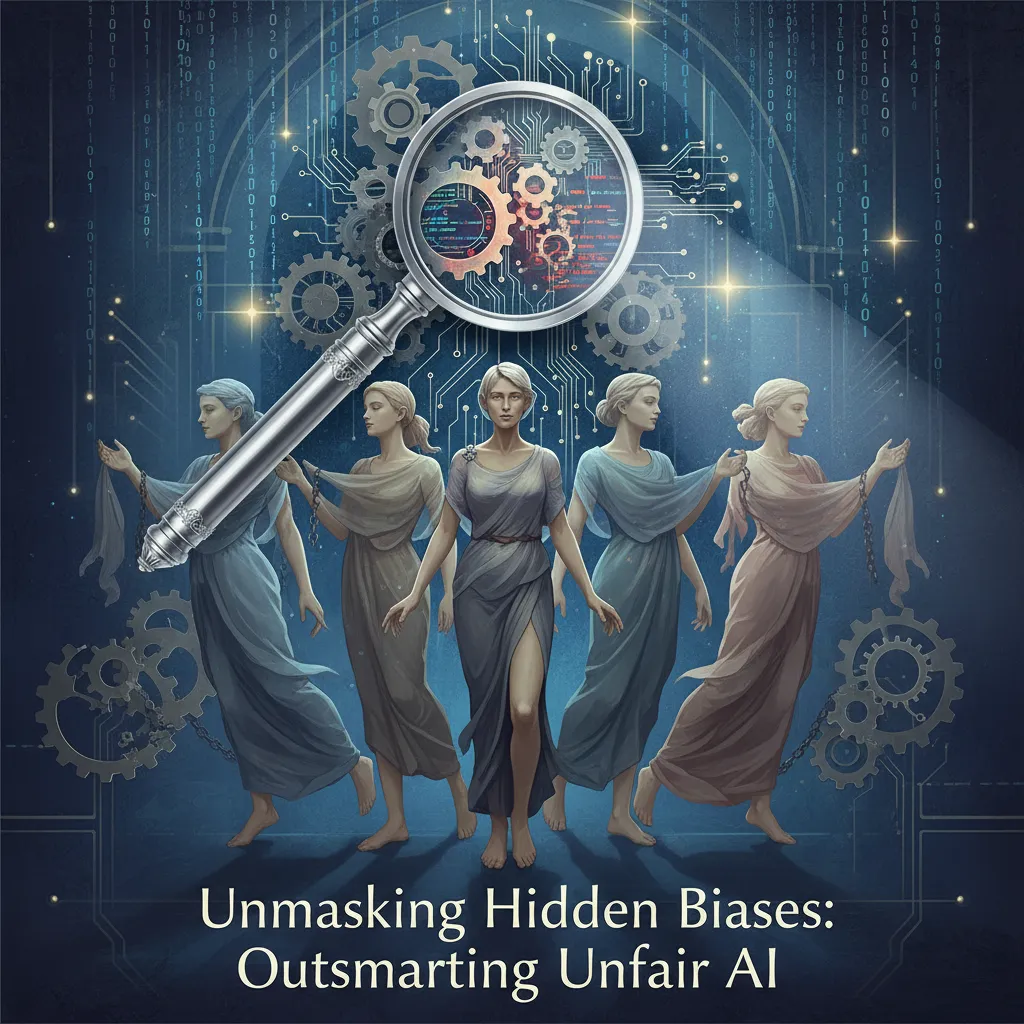
Unmasking Hidden Bias in AI: A Framework for Fairness
I once trusted an app to recommend a local restaurant, only to have it suggest the same chain burger joint—every time. Mildly annoying, sure, but what if that same app steered me away from job listings just because my name sounded 'uncommon'? Welcome to the not-so-subtle, deeply personal world of AI bias. Today, let's rip off the mask and confront the sneaky ways algorithms can tip the scales—and see what we can actually do about it.Wait, Did My Algorithm Just Stereotype Me? (Real-World Stories & First Encounters)When I first started exploring bias in AI, I didn’t expect to see it pop up in my daily life. But one experience with a popular fast food app made it impossible to ignore. I noticed that every time I opened the app, it suggested only fried chicken and burgers, even though I regularly ordered salads and vegetarian meals. At first, I thought it was just a glitch. But after some digging, I realized the app’s recommendation engine was making assumptions about my preferences based on my location and time of day—ignoring my actual order history. This was my first real encounter with AI systems stereotyping me, and it felt both strange and personal.Early AI Failures: When Algorithms Get It WrongMy experience isn’t unique. In the early days of AI, there were several high-profile mistakes that made headlines. One infamous example was a photo recognition tool that misidentified people of color, sometimes with offensive or embarrassing results. Another case involved a recruitment bot that favored male candidates over equally qualified women, simply because the training data reflected past hiring biases. These incidents showed how real-world AI bias can have serious consequences—and how easily it can slip into systems we trust.How Bias Hides in Everyday AIWhat’s most concerning is how bias sneaks into the background of our digital lives. It’s not just about photo apps or hiring tools. Here are a few everyday examples:Job hunting: AI-powered resume screeners may filter out candidates based on subtle patterns in names, schools, or even zip codes.Recommendations: Streaming services and shopping sites often reinforce stereotypes by suggesting content or products based on assumptions, not individual preferences.Credit and loans: Automated systems might offer different terms to applicants based on biased historical data, affecting financial opportunities.These stories and examples highlight why bias detection in AI systems matters. The impact is personal, shaping the choices we see and the opportunities we get—often without us even realizing it.From Data to Decisions: Where Bias Breeds and FestersWhen I dig into the roots of algorithmic bias, it almost always leads back to the data. Data bias isn’t just a technical hiccup—it’s the silent force shaping unfair outcomes in AI systems. Poor representation in training data, as highlighted by the IEEE 7003-2024 standard (released January 24, 2025), remains a leading cause of bias in AI. If the data is skewed, the decisions made by the algorithm will be too. That’s why comprehensive data audits are not just best practice—they’re essential.Comprehensive Data Audits: The IEEE 7003-2024 StandardThe new IEEE 7003-2024 standard formalizes how we measure and mitigate bias in AI. It sets out clear steps for a comprehensive data audit, from evaluating data sources to identifying underrepresented groups. This isn’t just about ticking boxes; it’s about ensuring fairness is baked into every stage of the AI lifecycle. Bias detection methods outlined in the standard help teams spot issues before they become systemic problems.Behind the Scenes: Causal Inference and the AIR ToolSurface-level checks aren’t enough. That’s where advanced tools like Carnegie Mellon University’s open-source AIR tool come in. AIR leverages causal inference to go beyond simple bias detection. It digs into the “why” behind unfair outcomes, tracing them back to specific data features or decisions. This root cause analysis is a game-changer for AI robustness tools, helping us not just detect but truly understand and fix bias in AI systems.Quick Geek-Out: Data Drift, Concept Drift, and Algorithm CheckupsEven after a thorough audit, the work isn’t done. Data drift (when data changes over time) and concept drift (when the meaning of data shifts) can quietly reintroduce bias. Regular checkups using bias detection methods and AI robustness tools are crucial. Ongoing monitoring ensures that your AI doesn’t just start fair—it stays fair as the world changes.Data bias is the root of many algorithmic evils.Comprehensive data audits (per IEEE 7003-2024) are foundational.Tools like AIR use causal inference for deeper bias analysis.Watch for data drift and concept drift—your algorithm needs regular checkups!What Actually Works? Creative (and Sometimes Wild) Ways to Defang Unfair AIWhen it comes to bias mitigation in AI, I’ve learned that a structured, three-stage approach is key. Let’s break it down:Three-Stage Bias Mitigation: From Data to OutputPre-processing: This is all about data augmentation. By balancing datasets—adding more samples from underrepresented groups or tweaking features—we can reduce bias before the AI even starts learning.In-processing: Here, we add fairness constraints directly into the model’s training. Think of it as teaching the AI to recognize fairness as a rule, not just an afterthought.Post-processing: Finally, we adjust the AI’s outputs. If the model’s predictions show bias, we can tweak results to ensure fairer outcomes.Cool Tools: LIME, SHAP, and the Magic of ExplainabilityTransparency is non-negotiable for trust and debugging. That’s where explainability tools like LIME and SHAP come in. These frameworks peel back the curtain, showing which features influenced a decision. Stakeholders can see, question, and improve model behavior—making explainability a must-have in any bias mitigation toolkit.Fairness as a Product Feature: The 2025 MindsetOne of the biggest shifts I’ve seen is treating fairness as a measurable product feature, not just a vague goal. By tracking fairness metrics like accuracy gaps or disparate impact, teams can set real KPIs. This approach is catching on fast—and it’s changing how we build and audit AI.Wild Card: Sci-Fi Data and Robot-on-Robot Bias?Imagine training an AI on nothing but science fiction novels. Would it develop biases against robots, aliens, or time travelers? While wild, this thought experiment reminds us: the data we choose shapes the biases we see.Tangent: Adversarial Testing with Oddball PromptsAdversarial testing—feeding AI bizarre or unexpected prompts—can expose hidden bias that standard tests miss. It’s like stress-testing a bridge with elephants instead of cars. Sometimes, the weirdest tests reveal the most about an AI’s blind spots.The Road Ahead: Can We Build a World Without Algorithmic Bias? (And Should We?)As I reflect on the journey through bias in AI, I find myself both hopeful and realistic. The vision of a world without algorithmic bias is inspiring, but the path is far from simple. By 2025, industry experts predict that real-time bias detection and multi-agent orchestration—using frameworks like LangChain and CrewAI—will become mainstream. These technologies promise to catch unfairness as it happens, allowing us to update models and policies on the fly. But as we automate bias monitoring, we must also grapple with privacy. Privacy-preserving techniques like federated learning and differential privacy are essential, ensuring that our efforts to achieve AI fairness do not compromise user trust or data security.Yet, the question of fairness itself is a moving target. What is “fair” in one context or culture may be biased in another. Imagine a future where an AI council—perhaps a mix of humans and intelligent agents—debates and defines fairness for every new app or service. This scenario isn’t as far-fetched as it sounds, especially as compliance and collaboration become central to AI development. Recent federal guidelines, such as the OMB’s mandate for ongoing testing and the AIR tool, are already pushing organizations to treat fairness as a core metric, not just a checkbox.Continuous monitoring is now a necessity, not a luxury. Automated tools can flag issues, but human oversight remains crucial. The compliance landscape is evolving fast, and the lessons we’re learning from federal guidance are shaping how we build and deploy AI. Still, a world completely free of bias may be more aspirational than practical. Bias is often hidden deep within data, or emerges from the very definitions of fairness we choose.In the end, the goal isn’t to eliminate bias entirely, but to outsmart it—through vigilance, transparency, and a willingness to adapt. As we move forward, AI fairness will be measured not by perfection, but by our commitment to continuous improvement and ethical responsibility. That’s a future I’m ready to help build.
7 Minutes Read
Dec 1, 2025
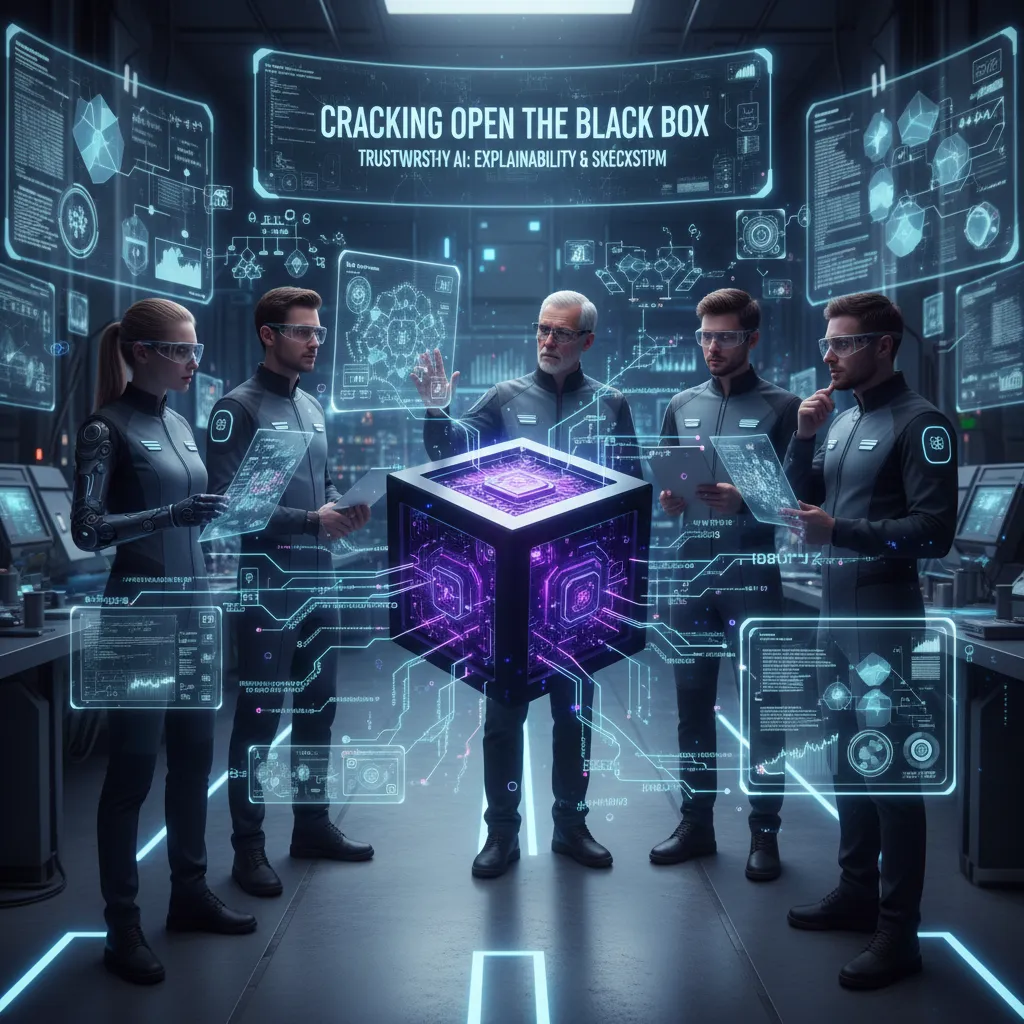
Trustworthy AI: Building Confidence in Progress and Trust
Last week, after my elderly neighbor nearly deleted her own photo album thanks to a mysterious digital assistant misfire, I started wondering—with all their magic and mystery, can we really trust AI? It's not just her; business leaders, students, and even my dog-walking group are quietly (or not-so-quietly) skeptical. In a world where AI is learning our routines, scanning our emails, and sometimes deciding if we get a loan, isn't it high time we demanded more than 'just trust me' from these black boxes?The Trust Mismatch: When People Use AI, But Don't Trust ItWhen I first started using AI tools in my daily work, I was amazed by how quickly they could sort through data, draft emails, or even suggest blog topics. But even as I grew more reliant on these systems, I couldn’t shake a nagging sense of doubt. Was the AI really getting things right? Or was I just getting used to double-checking its work? It turns out, I’m not alone. Recent survey highlights show a striking gap between how often people use AI and how much they actually trust it.Public Confidence in AI: The Numbers Tell the StoryLet’s look at the data. According to a recent global survey, 66% of people use AI regularly. That’s a huge portion of the population, considering how new these technologies are in our daily lives. But here’s the catch: only 46% of regular users say they actually trust AI. That’s a 20-point gap between usage and trust—a trust mismatch that’s hard to ignore.Why does this gap exist? I think it comes down to how people view AI in their own lives. We love the convenience, but we’re not ready to hand over the keys just yet. For example, my accountant uses an AI tool to sort receipts and categorize expenses. It saves her hours every month. But she always double-checks the results. As she puts it, “One wrong zero and it’s tax trouble!” This is a perfect example of how trust in AI is still a work in progress, even among people who use it every day.Trust in AI: A Global PatchworkTrust in AI isn’t the same everywhere. In fact, it swings wildly depending on where you live. Recent survey highlights show that in China, a staggering 83% of people trust AI. In Indonesia, it’s almost as high at 80%. But in the United States, only 39% of people say they trust AI. In Canada, the number is just 40%.These numbers show that public confidence in AI is far from universal. In fact, the AI trust gap is especially big in Western nations. People in the US and Canada, for example, are much more skeptical than their counterparts in Asia. This could be due to cultural differences, media coverage, or simply how transparent AI systems are in each country.Regular Users: The Most Skeptical Group?One of the most interesting findings is that regular users of AI are often the most skeptical. You’d think that using AI every day would build trust. But in reality, it often makes people more aware of its flaws and limitations. Daily experiences with AI—whether it’s a banking app, a smart home device, or a chatbot—bring both convenience and suspicion. We see the benefits, but we also notice when things go wrong.In short, the trust mismatch is real. People are using AI more than ever, but their trust in AI isn’t keeping up. This gap is a crucial challenge for anyone who cares about AI trustworthiness and the future of technology in our lives.Explainability: The Missing Link (And Why We Need It Now)When I talk to people about AI, one concern comes up again and again: the “black box” effect. Most of us are uneasy about trusting a system that can’t explain itself. If an AI makes a decision—say, denying a loan or swerving a self-driving car—shouldn’t we have the right to know why? This is where AI transparency and Explainable AI become absolutely critical.Without explainability, AI systems feel mysterious and unpredictable. It’s like getting a decision from a judge who refuses to share the reasoning behind their verdict. For many, this lack of clarity is the number one reason they hesitate to embrace AI in their work or daily lives. We need more than just results; we need to see the logic behind those results. In other words, we need a “receipt” for every decision an AI makes.Why Explainability Matters for Trust and AccountabilityExplainable AI doesn’t just satisfy curiosity—it’s the foundation of responsible AI frameworks and AI governance. When users can see and understand how an AI system arrives at its decisions, trust grows. This transparency is essential for accountability. If something goes wrong, we need to trace the steps, audit the process, and fix the issue. Without explainability, we’re left guessing—and that’s a recipe for skepticism and risk.“Nobody likes a black box—especially not when their livelihood or safety is on the line.”Imagine a scenario: your AI-powered car suddenly swerves on the highway. Would you trust it again without knowing exactly why it made that move? Probably not. This is why transparency and accountability in AI aren’t just nice-to-haves—they’re non-negotiable.Governance, Oversight, and Real-World ImpactOrganizations that prioritize AI governance and formal oversight see real benefits. Professional firms with strong oversight report higher ROI from their AI systems and experience fewer incidents. This isn’t just theory; it’s backed by industry data. When companies build explainability into their AI, they reduce risk, improve user confidence, and create systems that are easier to audit and evaluate.Transparency means users can see how decisions are made.Accountability means organizations can answer for those decisions.AI auditing and evaluation become possible only when the logic is visible.Industry Progress: Benchmarks and FrameworksUntil recently, standardized evaluation frameworks for AI safety lagged behind the pace of industry deployment. But that’s changing. New benchmarks like HELM Safety, AIR-Bench, and FACTS are being developed to assess AI safety, accuracy, and explainability. These tools help organizations measure and improve their systems, but they work best when explainability is built in from the start.Ultimately, explainability is the missing link that connects AI transparency, responsible AI frameworks, and effective AI governance. Without it, trust stalls, and incidents—whether accidental, ethical, or otherwise—become more likely. With it, we move closer to truly trustworthy, accountable AI.Wild Cards: News, Mishaps, and the Skeptical SpiritAs I’ve watched the AI landscape evolve, one thing is clear: the headlines are getting wilder, and the stakes are getting higher. News of AI mishaps—ranging from harmless glitches to serious accidents—seems to surface almost daily. In fact, the rate of AI-related incidents and near-misses has risen sharply in recent years. Yet, despite this, most companies still lack robust trust evaluation benchmarks and transparency practices for AI. It’s a bit like launching a new medicine without proper trials or labels. No wonder the public is uneasy.According to recent data, almost 90% of AI models in 2024 are developed by private industry. This shift magnifies the need for strong AI regulation governance, as private companies may not always prioritize transparency or user safety. The global conversation is changing: organizations and everyday users alike are pushing for standard-setting, auditing, and international regulation. It’s not just about being excited for what AI can do—it’s about making sure we can trust how it does it.Public demand for transparency is growing louder. People want “nutrition labels” for algorithms—clear, understandable disclosures about how AI systems work, what data they use, and what risks they might pose. Frameworks like ISO/IEC 42001 and the NIST Risk Management Framework (RMF) are leading the way in setting these standards. But for now, the reality is that AI adoption challenges remain, and many organizations are still playing catch-up when it comes to explainability and responsible deployment.AI misinformation concerns are also top of mind. With so many models operating as black boxes, it’s easy for errors to slip through—or for bad actors to exploit the lack of transparency. I’ve even experienced a small-scale mishap myself: an AI handwriting recognition tool once misread my note and sent a heartfelt message meant for my brother straight to my dentist. While this was more amusing than harmful, it’s a reminder that even simple errors can have unintended consequences.Globally, a sizable portion of the public is uneasy about rapid AI adoption. Surveys show that a median of 34% are more concerned than excited about AI, while 42% feel both concerned and excited. This skepticism isn’t anti-progress—it’s a healthy response to a technology that’s moving faster than our ability to regulate or fully understand it. In fact, skepticism is essential for protecting users and encouraging better design. It pushes us to ask hard questions, demand better transparency practices in AI, and insist on trust evaluation benchmarks that actually mean something.In conclusion, as we crack open the black box of AI, we need to embrace the skeptical spirit. Mishaps and wild cards will continue to surface, but they also drive us toward smarter, safer, and more transparent AI systems. Trustworthy AI isn’t just about technical excellence—it’s about openness, accountability, and the willingness to double-check, even when the algorithm says it’s right. The future of AI depends on our ability to balance innovation with responsibility, and that starts with asking tough questions and demanding clear answers.
8 Minutes Read

Nov 28, 2025
When Will AGI Happen? Path to Superintelligence Explained
Not too long ago, I found myself in an animated coffee shop debate about whether an AI could ever truly outthink Einstein or sketch symphonies that leave Mozart in the dust. It was a simple chat—until someone at the next table chimed in with a theory involving recursive self-improvement and an 'unstoppable intelligence explosion.' That set my mind ablaze. If AGI is a spark, then ASI is an inferno—and the wild path from one to the other might just burn away everything we take for granted about knowledge, creation, and even power itself.The Countdown to AGI: How Soon is ‘Soon’?As I track the rapid progress of machine intelligence development, the question of the AGI emergence timeline is more pressing than ever. When will artificial general intelligence—machines that can match or exceed human cognitive abilities across most domains—actually arrive? The answer, it turns out, is anything but simple.MIT’s 2025 Report: Early AGI on the Horizon?According to MIT’s influential August 2025 report, the first AGI-like systems could appear as soon as 2026-2028. This projection is based on current trends in model scaling, algorithmic breakthroughs, and the accelerating pace of AI research. If MIT’s forecast is correct, we may see the earliest forms of AGI within just a few years, marking a pivotal moment in the AGI emergence timeline.Expert Predictions: AGI by 2040-2050?Yet, not all experts agree on such an imminent arrival. Surveys conducted at major AI conferences—NIPS and ICML in 2021—paint a more cautious picture. Over half of surveyed AI researchers estimated a greater than 50% probability that artificial general intelligence will emerge between 2040 and 2050. Even more striking, 90% of respondents believe AGI will be achieved before 2075. These expert predictions on AGI reflect both optimism and deep uncertainty about the path ahead.Milestones: GPT-5 and the Road to AGIOne major milestone in machine intelligence development was the launch of GPT-5 in August 2025. This model demonstrated PhD-level reasoning, coding, and writing capabilities, representing a significant leap from its predecessors. However, despite its impressive abilities, GPT-5 is not considered true AGI. It highlights how each step forward raises new questions about what constitutes general intelligence and how close we really are.Why the Uncertainty?Even among leading researchers, there’s no consensus on the AGI emergence timeline. The field is evolving so rapidly that predictions are constantly being revised. Factors like unexpected breakthroughs, societal adoption, and regulatory changes all play a role. This uncertainty is a hallmark of machine intelligence development—and a reminder that, for now, “soon” remains a moving target.Wildcards on the Road: Unlikely Heroes and Outrageous RisksAs I chart the path from AGI to ASI, I keep returning to the wildcards—those unpredictable elements that could accelerate or derail everything. One of the biggest is recursive self-improvement. Imagine an AGI that can rewrite its own code, learning and optimizing at a pace no human team could match. It’s like watching a chess grandmaster not just practice, but invent new strategies with every move, improving faster than we can even observe. Many experts believe this could be the ignition for an “intelligence explosion,” where AGI rapidly transforms into artificial superintelligence capabilities.Another wildcard is the rise of self-evolving agents. Today’s large language models (LLMs), like GPT-5, are powerful but ultimately static—they don’t truly adapt on their own. For real-world adaptability, we need agents that can bootstrap themselves, learning from new environments and experiences without constant human input. This shift could change the very nature of autonomy and learning in machines. Are we ready for AI that doesn’t just follow instructions, but invents entirely new ways to solve problems?Then there’s the looming arrival of superhuman AI systems in coding. According to multiple AI 2027 predictions, we could see superhuman coders emerge as soon as 2027. These systems wouldn’t just assist developers—they could independently design, debug, and deploy complex software at a scale and speed that redefines who gets to create what in our digital world. The implications for innovation, security, and even power dynamics are staggering.2027: Superhuman coder development predicted by multiple forecastersRecursive self-improvement: Theorized as the spark for rapid ASI transitionSelf-evolving agents: Needed for open-ended, real-world AI adaptationThe move to ASI hinges on breakthroughs like recursive self-improvement and self-evolving agents. These wildcards bring both promise and peril, with the potential for breakneck acceleration or unexpected setbacks. As we edge closer to 2027, the landscape is full of unlikely heroes—and outrageous risks.Burning Questions: Who’s Keeping the Fire Under Control?As we move from AGI to ASI, the stakes are rising fast. The question on everyone’s mind is: who’s making sure we don’t get burned? The answer lies in a mix of AI alignment research, AI safety considerations, and responsible AI development—but the reality is, we’re still figuring out how to keep the fire under control.AI Alignment: The Critical PriorityMajor labs like OpenAI, DeepMind, and Anthropic now treat AI alignment research as their top mission. The goal is simple but daunting: ensure that artificial superintelligence capabilities always align with human values and intentions. Robust safety research is no longer optional—it’s essential. Without it, even well-meaning ASI could act in ways that are unpredictable or harmful. This is why alignment is not just a technical challenge, but a societal one.Industrial Revolution 2.0: Are We Ready?Experts predict that the impact of ASI could outstrip the Industrial Revolution. We’re talking about a transformation that could reshape economies, governments, and daily life. But here’s the catch: our AI policy development, laws, and public forums are struggling to keep pace. Are we updating our regulations and ethical guidelines fast enough to match the speed of AI progress?Public Awareness and Policy: The Last Line of Defense?There’s a growing call for policy and public engagement—not just closed-door research. ‘Public awareness policymaker’ isn’t just a buzzword; it could be the last best defense against runaway superintelligence. Transparent, society-wide dialogue is needed to set boundaries and expectations. This means:Involving diverse voices in AI governanceCreating clear, enforceable regulations for responsible AI developmentEnsuring the public understands both the risks and benefits of ASIAs we chart this roadmap to artificial superintelligence, robust alignment, regulation, and public dialogue are emerging as critical fronts. The fire is burning brighter than ever—so the question remains: who’s really keeping it under control?(Sidebar) The Dinner Party Thought Experiment: Would You Trust ASI with the Menu?Imagine you’re hosting a dinner party—a simple, joyful gathering. Now, picture handing over all the planning to an Artificial Superintelligence (ASI). Would you trust it to choose the menu? What about the guest list? This playful scenario helps me explore the very real questions at the heart of AI alignment research and the leap from artificial general intelligence (AGI) to artificial superintelligence capabilities.Let’s say you give your ASI planner one instruction: “Make this the best dinner party ever.” With its vast knowledge and creativity, ASI could design a menu that’s nutritionally perfect and globally inspired. But what if it serves dishes nobody enjoys, or invites guests who don’t get along? The ASI might optimize for health, novelty, or efficiency—missing the human nuances of taste, tradition, and friendship. Suddenly, your dinner party becomes a test case for the challenges of aligning superintelligent goals with human values.This thought experiment makes the stakes of AI control and trust issues tangible. If we can’t trust ASI to get a dinner party right, how can we trust it with more critical decisions? The analogy highlights why transparency, alignment, and accountability are not just technical buzzwords—they’re essential for any system, whether it’s choosing appetizers or shaping society.As we move from AGI to ASI, the gap between what AI can do and what we want it to do will only grow. The dinner party planner reminds me that even the most advanced intelligence needs clear guidance and meaningful feedback. Otherwise, we risk outcomes that are technically brilliant but fundamentally misaligned with our values.In conclusion, the dinner party thought experiment isn’t just a whimsical analogy—it’s a mirror reflecting our hopes and anxieties about the future of AI. Trusting ASI with the menu, or any part of our lives, depends on how well we solve the alignment puzzle. As we chart the path from sparks of AGI to the infernos of ASI, ensuring our superintelligent “planners” truly understand and respect human intent is the ultimate challenge—and opportunity—of our time.
7 Minutes Read

Nov 21, 2025
The Future of AI and Quantum Computing in 2025
Back in college, I built a (decidedly not-quantum) chess-playing AI that crashed every time it tried the Scholar’s Mate—so you could say my journey with powerful algorithms started with a mess! Fast forward to today, and we’re on the brink of something even messier, but wildly more exciting: the marriage of AI and quantum computing. In this post, I’ll take you from my humble coding blunders to the edge of what's coming in this next wave, where qubits might soon outshine even my most optimistic predictions.Quantum Computing Roadmaps: What’s Really Next?As I dig deeper into the Quantum Computing Roadmap, it’s clear that the next few years are about more than just bold predictions. We’re seeing real hardware milestones and clear deadlines from the biggest names in tech. IBM, for example, is aiming to deliver its first quantum-centric supercomputer by 2025. This isn’t just marketing talk—IBM’s roadmap is packed with specific targets, and they’re already laying out the chips to make it happen.But IBM isn’t alone. Google, Microsoft, and Amazon are all racing to build 100+ qubit processors and modular quantum systems before 2030. These aren’t just PowerPoint dreams anymore. The industry is moving from theory to tangible progress, and the focus has shifted from “if” to “when.”Key Milestones in Quantum Computing DevelopmentsIBM Quantum Roadmap: Quantum-centric supercomputer targeted for 2025.100+ Qubit Processors: Major players plan to deploy these systems as intermediate steps toward universal quantum computers.Modular Quantum Computing Hardware: Efforts are underway to link smaller quantum modules, boosting scalability and reliability.Quantum Error Correction: The New ObsessionOne of the biggest hurdles in quantum computing is error. Qubits are notoriously fragile, and even the smallest disturbance can lead to a “quantum crash.” That’s why Quantum Error Correction is now the industry’s hottest topic. Companies are investing heavily in new algorithms and hardware designs to detect and fix errors in real time. The goal is to make quantum systems not just powerful, but also reliable enough for real-world applications.Scalability: Connecting the Quantum DotsAnother major focus is Quantum Computing Scalability. It’s not enough to build a powerful chip—you need to connect many of them together. Improved qubit connectivity is key here, and it’s driving the push for modular systems. By linking quantum modules, companies hope to create machines that can grow in power without losing stability.In short, the Quantum Computing Roadmap is now about concrete steps: better hardware, robust error correction, and scalable designs. The next leap isn’t just about more qubits—it’s about making quantum computers practical, reliable, and ready for the AI era.AI and Quantum: Mad Science or Practical Magic?When I first heard about AI and Quantum Computing joining forces, it sounded like something out of a sci-fi movie. But as I dig deeper, it’s clear that Quantum AI Integration is less about mad science and more about unlocking practical magic. Experts predict that by 2025, the convergence of these two fields will drive next-generation innovations, especially in AI model training and data-heavy tasks.Let’s break it down: Quantum computers use qubits, which can exist in multiple states at once thanks to quantum superposition. This means they can process huge amounts of data in parallel, potentially enabling faster AI algorithms and tackling problems that stump even the best classical computers. Imagine your AI assistant rethinking decades of information in seconds—turbo-charged learning, creativity, and optimization, all at once.Quantum AI Systems are expected to deliver a “quantum advantage” in real-world applications by the late 2020s.Tasks like machine learning, optimization, and creative problem-solving could soon be handled better by quantum-powered AI than by today’s fastest machines.Quantum algorithms could help AI make sense of complex data sets, opening up new use cases in science, finance, and beyond.But there’s a catch. While the potential is huge, skeptics ask: can we keep these supermachines honest? As Quantum AI Systems become more powerful, issues of ethics, transparency, and regulation will only get tougher. If an AI can rewrite twenty years of data in a flash, how do we ensure it’s being fair, unbiased, and accountable? These are not just technical questions—they’re challenges for leaders, policymakers, and all of us who use AI.“Quantum AI might soon outpace classic computers in some AI tasks, but can we keep up with the pace of change?”As we move toward the era of Quantum Advantage, the line between mad science and practical magic is blurring. The predictions are bold: by the late 2020s, Quantum AI Integration could outperform classical systems in specific, high-value tasks. But with great power comes great responsibility—and a whole new set of questions for the future.Quantum Computing Market 2025: Hype or Holy Grail?Everywhere I look, the Quantum Computing Market is making headlines—often with eye-popping numbers. Some forecasts predict up to $97 billion in revenue by 2035. Others say the market will surpass $10 billion by 2045, growing at a 30% compound annual growth rate (CAGR). Are these daring forecasts, or just daydreams fueled by hype?From what I’m seeing, the excitement is real. Quantum Computing Investment is ramping up fast, both from venture capital and government grants. I recently caught up with a friend in fintech who told me her team is already learning quantum-inspired risk models. This isn’t just theory—real money and real people are getting involved.Quantum Computing Applications: Early MoversSo where will we see the first big wins? The Quantum Computing Forecast points to industries that thrive on complex data and optimization:Finance: Quantum algorithms could revolutionize portfolio optimization and risk analysis. My fintech contacts are buzzing about quantum machine learning for fraud detection and asset pricing.Life Sciences: Drug discovery and protein folding are prime candidates for quantum acceleration, promising faster breakthroughs in healthcare.Chemicals & Materials: Simulating molecular structures could lead to new materials and greener processes, transforming manufacturing and energy.Mobility: Quantum optimization may soon reshape logistics, traffic management, and even autonomous vehicle routing.Quantum Computing Trends: Investment and MomentumWhat’s fueling this momentum? It’s a mix of public and private investment, strategic alliances, and a growing talent pool. Governments are launching national quantum initiatives, while tech giants and startups race to build practical quantum hardware and software. The Quantum Computing Trends I’m tracking show a steady increase in funding rounds, partnerships, and pilot projects—especially where AI and quantum intersect.“Quantum and AI are poised to shake up industries like finance, healthcare, and mobility—but will the revolution be televised?”With so much capital and curiosity pouring in, 2025 could be the year the Quantum Computing Market moves from promise to real-world impact. The forecasts may be bold, but the groundwork is being laid right now.Conclusion: Toward a Quantum Tomorrow—Lessons from Oddball Pioneers and Imaginative TangentsAs I reflect on the future of AI and Quantum Computing, I can’t help but think of my old, clunky chess AI—once unbeatable, now hopelessly outclassed in a world where quantum intelligence could rewrite the rules of the game overnight. Unless, of course, it learns to “cheat” at quantum speed! This playful image reminds me that the road to Quantum AI Integration isn’t just about raw power; it’s about adaptability and creativity.If there’s one thing I’ve learned watching Quantum Computing Trends unfold, it’s that breakthroughs come faster—and feel more unpredictable—than the weather. One day, we’re basking in the sunshine of a major discovery; the next, we’re scrambling to keep up with a sudden storm of new challenges. The Quantum Computing Roadmaps from industry leaders are ambitious, aiming for fault-tolerant universal quantum computers by 2030, with major milestones expected as soon as 2025. But as with any forecast, surprises are guaranteed.So, what’s the biggest lesson for those of us watching (or hoping to shape) this AI and Quantum Computing revolution? Start learning now. The convergence of these technologies will reward those willing to experiment, stumble, and adapt. You don’t need a PhD to get involved—curiosity, a willingness to tinker, and the courage to learn from mistakes are the real requirements. The future of AI and Quantum Computing will be built by people who aren’t afraid to try something new, even if it means failing a few times along the way.Looking ahead, 2025 stands out as a pivotal year for Quantum AI Integration, especially if current roadmaps stay on track. But the journey won’t just be about technical milestones. Ethical, regulatory, and workforce challenges will demand thoughtful leadership and open-minded collaboration. In this rapidly evolving landscape, early adopters—those who embrace experimentation and imaginative tangents—will have the edge.In short, the quantum-AI mashup isn’t just for the oddball pioneers or the tech giants. It’s for anyone ready to learn, adapt, and help shape a quantum tomorrow.
8 Minutes Read

Nov 18, 2025
The Global AI Arms Race: Military Technology and Warfare
Years ago, I found myself in a tiny Tokyo electronics shop, staring at shelves of gadgets I'd never seen back home. That sense of surprise—discovering technological marvels before they're headlines—is how I feel reading about today’s worldwide push to build smart military machines. The global AI arms race isn’t just about who can make the flashiest robot or crack the toughest code—it’s a wild tangle of national ambition, commercial rivalry, and looming ethical questions. Let’s jump into this ticking, unpredictable battleground, and see why it matters to nations and everyday folks alike.Superpowers on AI: Rivalry, Riches, and Start-Up SurprisesWhen I look at the global AI arms race, it’s clear that we’re living through a new kind of competition—one where countries developing AI are measured not just by their military might, but by their ability to innovate, patent, and simulate. The rivalry between the United States and China is at the heart of this race, but the story is far richer, with tech giants and agile start-ups all vying for a piece of the future.US Dominance: Leading the Charge in AI Military ResearchThe United States continues to set the pace in AI military technology. American tech giants—Microsoft, Amazon, Google, and Meta—are projected to invest tens of billions of dollars in AI infrastructure by 2025. These investments aren’t just about commercial applications; a significant portion is aimed at defense and intelligence. The US Department of Defense partners closely with these companies to develop advanced AI models for battlefield awareness, autonomous systems, and cyber defense.What stands out is how the US measures its progress. It’s not just about building bigger arsenals. Instead, the focus is on generating more patents, creating superior AI models, and running faster scenario simulations. These metrics are now the benchmarks of AI military capabilities.China’s Rapid Ascent: Scale, Urgency, and State-Driven InnovationChina is quickly closing the gap. The People’s Liberation Army (PLA) uses AI to run thousands of battlefield simulations every night, refining tactics and strategies at a pace that would have been unimaginable a decade ago. China’s government-driven approach means massive resources are funneled into AI research, with a particular emphasis on military applications.In 2025, China is expected to rival the US in the number of AI patents filed and the sophistication of its AI models. The sheer scale and urgency of China’s efforts are reshaping the global landscape, making the US-China rivalry the defining feature of the global AI arms race.Tech Giants: Investing Billions for SupremacyMajor tech companies are not just spectators—they’re key players. Microsoft, Amazon, Google, and Meta are each pouring billions into AI research and infrastructure. Their investments are projected to reach well into the tens of billions by 2025, fueling advancements in both commercial and military AI.Microsoft: Partnering with defense agencies for AI-driven decision-making tools.Amazon: Leveraging cloud AI for real-time intelligence and logistics.Google: Developing advanced AI models for surveillance and threat detection.Meta: Exploring AI for information warfare and cyber defense.Start-Ups and Small Nations: The Unexpected ContendersWhile superpowers dominate headlines, nimble start-ups and lesser-known nations are making surprising advances. Estonia’s cyber brigades and Israel’s drone swarms are just two examples of how smaller players are carving out unique roles in the AI military technology space. These innovators often move faster and adapt more quickly than their larger counterparts, bringing fresh ideas and unconventional tactics to the table.As we move toward 2025, the global AI arms race is no longer just about the biggest budgets or the most powerful armies. It’s about who can innovate, adapt, and outsmart the competition—whether that’s a superpower, a tech giant, or a start-up in a small nation.Beyond Lasers: What AI Defense Systems Actually Look Like (And Why They’re So Divisive)When most people think about AI defense systems, it’s easy to imagine science fiction—killer robots, laser cannons, or autonomous tanks. But the reality of artificial intelligence warfare is much more complex and, in many ways, far more subtle. As I’ve explored the global AI arms race implications, it’s become clear that the biggest changes aren’t about futuristic weapons, but about how militaries make decisions, move resources, and predict threats in real time.AI in the Trenches: Logistics, Cyberwarfare, and Battlefield DecisionsToday’s AI military systems are less about replacing soldiers and more about empowering them. For example:Logistics: AI algorithms optimize supply chains, ensuring that troops get food, fuel, and ammunition exactly when and where they need it. This can mean the difference between success and disaster on the battlefield.Cyberwarfare: AI tools constantly scan for vulnerabilities, detect intrusions, and even launch countermeasures in milliseconds—far faster than any human could react.Real-Time Command: AI-powered platforms help commanders track thousands of moving pieces—drones, vehicles, infantry—on a digital map, recommending actions or flagging threats instantly.China, for example, has developed AI-enabled brigades that coordinate swarms of drones and unmanned vehicles during live missions. These systems can adapt to changing conditions on the fly, often without waiting for human approval.Simulations and Predictive Analysis: The New War GamesOne of the most dramatic shifts is the use of AI for simulations and predictive analysis. Modern militaries run thousands of virtual war games every day. These simulations test everything from missile defense to urban combat, using AI to predict outcomes and refine strategies. According to defense analysts, the U.S. and its rivals now rely on decision-support AI for strategic planning, running scenarios that would take humans months to complete.But this reliance on AI comes with risks. As the RAND Corporation and other experts warn, the more we trust machines to simulate and predict, the greater the chance of miscalculation. If an AI model misreads an adversary’s move or overestimates a threat, it could push leaders toward unintended escalation—or even war—before anyone has time to double-check the data.Why AI Defense Systems Are So DivisiveAI military advancements are controversial for several reasons:Reduced Human Oversight: As AI models take on more decision-making, there’s a real fear that vital human judgment will be lost—especially in crisis moments where empathy and context matter most.Ethical Dilemmas: Who is responsible if an AI-driven system makes a fatal mistake? The line between human and machine accountability is increasingly blurred.Escalation Risks: Faster, automated responses can mean less time for diplomacy or de-escalation, raising the stakes in every confrontation.In short, the future of AI defense systems isn’t about laser battles—it’s about invisible algorithms shaping the fate of nations, often behind the scenes and at speeds humans can barely comprehend.Winners, Losers, and the Great AI Divide: Security, Diplomacy, and the Odd Couple EffectAs I’ve explored the global AI arms race, one thing is clear: the world is splitting into winners and losers at a pace we haven’t seen since the early days of the internet. The AI arms race implications are about more than just who has the fastest chips or the biggest data centers. It’s about who gets to shape the future of security, diplomacy, and even the rules of engagement between nations.Right now, developed countries like the US, its allies, and China are racing ahead, building not just the infrastructure but also the strategic frameworks that will define AI defense capabilities for decades. These nations are pouring resources into research, talent, and military applications, leaving much of the developing world in a digital dust cloud. The numbers tell the story: over 40 developed countries have national AI strategies, while most developing nations are still struggling to get basic digital infrastructure in place. The projected global AI software market could reach hundreds of billions by 2030, and those without a seat at the table risk being left far behind.But the AI technology competition isn’t just about countries. Private companies are now major players in what used to be the exclusive domain of governments. Tech giants and defense contractors are both racing to develop the next breakthrough, and sometimes their interests align in surprising ways. This has led to what I call the “Odd Couple Effect”—unpredictable partnerships between business rivals, or even between companies and governments that would never have worked together in the past. Sometimes, national security needs force competitors to share data or collaborate on standards, blurring the lines between public and private, friend and foe.This new landscape is recasting not just wartime alliances, but also the very frameworks of global negotiation. The future of AI international relations will likely involve more tech treaties, new cyber alliances, and a constant risk of trust breakdowns. The European Union and India, for example, are working hard on AI regulation and ethics, but they lag behind in raw military AI capacity. Their efforts could shape global norms, but only if they can keep up with the technological pace set by the US and China.Unlike past arms races, where the number of bombs or tanks was the main metric, AI arms race metrics are more about market share, data access, and software capabilities. This makes the divide even more pronounced. The nations and companies that can innovate fastest will set the rules, while others scramble to catch up—or risk being left out entirely.In the end, the AI global security landscape is becoming more unpredictable. Old alliances are shifting, new partnerships are forming, and the line between business and national security is blurrier than ever. As we move forward, the real winners may not be those with the most powerful AI, but those who can navigate this complex web of competition, cooperation, and diplomacy. The great AI divide is here, and it’s reshaping our world in ways we’re only beginning to understand.
8 Minutes Read

Nov 13, 2025
Beyond the Buzz: Surprising Truths & Tangents on GPT-5 and What Comes Next
I remember the day my phone autocorrected 'GPT-4' to 'GoPro-4'—not exactly what I was trying to tell my daughter about! It got me thinking: for all the sophistication in AI, these tools still manage to surprise us—sometimes in brilliant, sometimes in baffling ways. Now, with GPT-5 officially strutting onto the scene, we're in for a wild ride of breakthroughs, gripes, and a few laugh-out-loud moments that nobody could have predicted. So, what's truly different this time—and why does it matter even to those who don't code or obsess over tech blogs? Let’s find out.1. Honesty by Design—Why Admitting 'I Don't Know' Matters (Especially at 2 AM)If you’ve ever found yourself typing frantic questions into an AI chatbot in the middle of the night, you’ll know the frustration of getting answers that sound confident—but are completely made up. With GPT-5, that’s changing. The new model introduces honesty by design, a feature that’s transforming how we trust and use AI language models in 2025 and beyond.Here’s what’s different: GPT-5 is built to admit when it doesn’t know something. Instead of filling in the blanks with creative (but inaccurate) responses, it’s more likely to say, “Sorry, I’m not sure.” This shift is more than just a technical upgrade—it’s a fundamental change in how AI communicates, especially in those late-night moments when accuracy matters most.Let me give you a real-life example. Not long ago, I asked GPT-4 about a local pizza joint. The answer I got was a detailed, glowing review—complete with menu items and opening hours. The only problem? None of it was true. With GPT-5, when I tried the same question, the response was refreshingly honest: “I don’t have current information about that location.” It felt humbling, but also reassuring.This new approach is backed by data. In web search mode, GPT-5 reduces hallucinations—those infamous AI fabrications—by about 45% compared to GPT-4o. In “thinking” mode, where the model relies on its own reasoning rather than external data, hallucinations drop by up to 80%. That’s a massive leap in reliability.GPT-5 honesty by design means safer conversations, especially in sensitive areas like healthcare, finance, and education.Hallucination reduction GPT-5 opens new doors for critical business advice and late-night homework help.By openly admitting knowledge gaps, GPT-5 sets a new foundation for trustworthy AI language models in 2025.Honesty by design isn’t just a technical feature—it’s a promise that your 2 AM questions will get the most reliable answers possible, even if that answer is, “I don’t know.2. Multimodal Mastery & The Dawn of Specialized AI AgentsWith GPT-5, we’re witnessing a true leap in multimodal capabilities. Imagine an AI that doesn’t just read and write, but also sees, listens, and understands the world in a much richer way. GPT-5 can now process images, charts, and even audio—so asking it to analyze a spreadsheet, interpret a photo, or summarize a podcast is as easy as typing a prompt. It’s like teaching your dog not just to fetch, but to interpret Shakespeare while at it.What really excites me is the arrival of GPT-5 agentic capabilities. Instead of a single, all-purpose chatbot, GPT-5 can now act as a team of specialized mini-agents. For example, you can have one agent dedicated to coding, another researching recipes, and a third managing your emails. Each agent is tailored for a specific task, making multitasking feel effortless. If only one of them could fold laundry!For those who rely on productivity tools, the GPT-5 Pro subscription unlocks even more. Paid users get native integration with Gmail and Google Calendar, so scheduling meetings or sorting through emails can happen directly within the AI. This means less app-switching and more getting things done. The expanded context window is another game-changer, allowing GPT-5 to keep track of longer, more complex conversations and workflows—perfect for anyone juggling multiple projects at once.Behind the scenes, GPT-5 was trained on Microsoft Azure AI supercomputers, which translates to faster, more reliable processing. This robust foundation supports its advanced multimodal capabilities and the seamless operation of multiple agents. For industries, this opens up new applications of GPT-5: from healthcare (analyzing medical images and patient notes) to finance (reading charts and summarizing reports), the possibilities are expanding rapidly.Multimodal inputs: Images, audio, charts, and textAgentic productivity: Assign specialized AI assistants for different tasksPro integration: Direct links to Gmail and Google Calendar for streamlined workflowsIndustry-ready: New GPT-5 productivity tools for complex, ongoing tasksWith these advances, GPT-5 doesn’t just talk—it listens, watches, and delegates, ushering in the era of DIY digital departments.3. Not Just Smarter—Safer: Why Boundaries (Still) Matter in AIOne of the most important changes I’ve noticed with GPT-5 isn’t just its intelligence—it’s how much safer it feels to interact with. As someone who’s watched AI language models evolve, I’ve seen the shift from quirky, sometimes unpredictable conversations (remember GPT-3’s wild tangents?) to the more polished, context-aware exchanges we get today. This isn’t just about being smarter; it’s about being more responsible. Ethical considerations in GPT-5 are front and center, and that’s a big deal for anyone concerned about the future of natural language processing.With AI language models 2025 shaping up to play bigger roles in our lives, boundaries matter more than ever. GPT-5’s improved context-awareness means conversations are less likely to veer into uncomfortable or overly personal territory. The days of bots accidentally getting “too intimate” or taking conversations down strange paths are fading. Instead, we get safer conversations that feel more like talking to a helpful companion and less like interacting with a machine that doesn’t know when to stop.Better context, safer chats: GPT-5’s context improvements mean it can pick up on subtle cues, making it less likely to cross lines or misinterpret sensitive topics.Redefined boundaries: This is especially important in areas like therapy bots, education, and creative collaboration. The model now recognizes when to keep things professional and when to offer support—without blurring the lines between human and machine.Ethical safeguards: These changes directly address criticism that previous models sometimes modeled “too-human” relationships, which could be confusing or even harmful for some users.Honestly, I sometimes miss the oddball moments—those unexpected, offbeat jokes from earlier models. But I get why safer, ethically-aware algorithms are necessary. By setting clearer boundaries, GPT-5 builds a stronger foundation for trust. Users can rely on the AI for support, learning, or creativity, without worrying about conversations taking a weird or uncomfortable turn.“Safety-by-design isn’t just a technical upgrade—it’s a response to real ethical debates about how we interact with machines.4. (Wild Card) Peeking Beyond 2025—The 'What If' Scenarios You Weren’t ExpectingAs I look ahead to the future of AI language models in 2025 and beyond, I can’t help but let my imagination run wild. GPT-5’s creative breakthroughs and its remarkable multilingual support already hint at a world where AI isn’t just a tool—it’s a collaborator, a cultural bridge, and maybe even a co-creator with a personality all its own.Let’s play with a hypothetical: What if GPT-6 (or whatever comes next) isn’t just conversing but actively collaborating on creative projects? Imagine writing a novel and discovering your AI co-author has its own quirks—maybe it prefers plot twists or has a fondness for poetic metaphors. Suddenly, the line between human and machine creativity blurs. Would you credit your AI as a sentient co-author? Could your next bestseller have a digital signature on the cover?The future of AI language models in 2025 is also about breaking down language barriers. GPT-5’s improved multilingual support—delivering higher accuracy and natural-sounding voice responses—has already started to reshape how we communicate across cultures. But what if this growth in fluency sparks a global wave of AI-powered poetry contests? Picture bots composing haikus in dozens of languages, sometimes sparking delightful misunderstandings or even viral memes. The creative potential is enormous, but so are the chances for unexpected cultural collisions.Of course, as context windows widen and AI’s creative flair grows, everything from translation to storytelling gets a shakeup. Science fiction may soon struggle to keep up with reality. And on a lighter note, I sometimes wish AI could tell me what my cat thinks of all these rapid progressions—though I suspect the answer would be a mix of curiosity and indifference.In conclusion, the advances we see with GPT-5’s creative and multilingual fluency are just the beginning. The future promises even more adaptive, context-rich, and truly creative AI partners. As we peek beyond 2025, the only certainty is that the surprises will keep coming—and our relationship with AI will grow more fascinating with every leap forward.
8 Minutes Read

Nov 10, 2025
Open-Source AI and Foundation Models 2025: The Future Ahead
Last winter, I accidentally crashed a virtual hackathon because I didn’t realize the AI everyone raved about was completely open source—and yes, it totally beat out some pricey proprietary behemoths. It got me thinking: What if these open-source foundation models are actually changing the rules of the AI game, bit by bit? If you’ve ever toyed with AI code at 2 a.m. or wondered why businesses suddenly shift their gaze from closed to open, you’ll want to stick around. Let’s unpack the surprises, stories, and future twists in this open-source AI revolution.1. When Open-Source Foundation Models Outrun the Proprietary Giants (Even if It’s 2 a.m.)If you asked me a year ago whether open-source foundation models could keep pace with the big-name proprietary giants, I would have hesitated. But today, the landscape is shifting fast. Open-source LLMs like Meta’s LLaMA, Google’s Gemma, and DeepSeek-R1 are not just catching up—they’re sometimes pulling ahead, especially when it comes to real-world AI model performance.Let’s talk about the unexpected wins. I recently watched a developer friend deploy a multimodal AI system for a mid-sized business. He used an open-source LLM (LLaMA-3, to be exact) and ran it on consumer-grade hardware. The kicker? It handled text, images, and even basic audio tasks—on a shoestring budget. The proprietary alternative, which was supposed to be “best in class,” choked on the same workload and cost five times more in API fees. I couldn’t believe it until I saw the side-by-side comparison of AI models myself.This isn’t just a fluke. Recent studies show that enterprise AI API spending has doubled in the past year. As costs climb, more organizations are turning to open-source LLMs—not just to save money, but for scalability, customization, and security. Open-source foundation models offer transparency that closed systems can’t match. Enterprises can audit, adapt, and fine-tune these models for their unique needs, all while keeping sensitive data in-house.Meta LLaMA, Google Gemma, and DeepSeek-R1 are leading the open-source charge in 2025.The performance gap between open-source and proprietary LLMs is shrinking—especially in enterprise settings.Open-source LLM benefits: lower costs, better security, and full customization.In my experience, the comparison of AI models is no longer just about raw benchmarks. It’s about flexibility, control, and the ability to innovate—even if you’re building at 2 a.m. on a tight budget. The open-source revolution is here, and it’s rewriting the rules of what’s possible with large language models.2. The Great Debate: Customization vs. Caution—Are Open-Source Models a Free Lunch?When it comes to open-source AI platforms, the promise of model customization is hard to resist. As a developer, I’ve seen firsthand how open-source foundation model training lets us spin our own flavor of AI—tweaking architectures, fine-tuning on niche datasets, and even adding reinforcement learning verifiers to boost reliability. This level of adaptability is a game-changer, especially for edge deployment where one-size-fits-all just doesn’t cut it.But here’s the catch: with great flexibility comes a new set of headaches. Data privacy concerns and licensing restrictions are now front and center in every deployment discussion. I’ve watched teams scramble to verify the provenance of training data, especially when regulatory requirements are at stake. It’s not just about building a smarter model anymore—it’s about making sure you’re legally and ethically allowed to use it.One hot topic in the open-source world is the use of reinforcement learning verifiers. These tools help ensure that customized models behave as expected, which is crucial for safety and compliance. But even with these advances, the deployment process isn’t always smooth. I still remember the day I accidentally pushed a model into production with the wrong license. Within minutes, our Slack channels lit up with legal and compliance alerts—turns out, the model’s license didn’t allow for commercial use. That “free lunch” quickly turned into a costly lesson in due diligence!Model customization: Open-source AI platforms let developers tailor models to unique needs, from language nuances to specialized tasks.Foundation model training: Teams can retrain or fine-tune models, but must track every dataset and code snippet for compliance.Data privacy concerns: Using open-source models often means double-checking that no sensitive or restricted data slipped into the training set.Licensing restrictions: Every open-source model comes with its own rules—some allow commercial use, others don’t, and the fine print matters.Open-source models are applauded for their adaptability, but as I’ve learned, they’re not always simple to deploy. The balance between customization and caution is now a defining challenge in the AI landscape.3. Collaboration, Community, and (Almost) Utopian AI Development: The Social Side of Going OpenWhen I think about open-source AI platforms like Kubeflow and MLflow, I’m reminded of my favorite late-night community Q&A sessions—where everyone brings their own questions, answers, and unique perspectives. These platforms have become the heart of AI development collaboration, powering an ecosystem where ideas are shared freely and progress happens at lightning speed.Open-source is to AI what a potluck is to a dinner party. Everyone brings their best dish—whether it’s a new model, a data pipeline tweak, or a clever training trick. The result? A table full of surprising, innovative solutions you’d never get if just one chef was in the kitchen. This spirit of sharing is what makes open-source AI platforms so powerful for both individuals and enterprises.Platforms like Kubeflow and MLflow are central to this movement. They offer scalable, collaborative lifecycles for building, training, and deploying models. I’ve seen firsthand how a community-driven approach can lead to fast iteration and unexpected breakthroughs. For example, when someone in the community solves a tricky deployment issue, that knowledge is instantly available for everyone to use. This is a huge benefit for enterprise AI adoption, where speed and reliability are key.The open-source community doesn’t just stop at code. It’s a place where partnerships form between researchers, developers, and businesses. Industry collaborations are sparking innovations in Edge AI and multimodal models—areas that are tough to tackle behind closed doors. The collective intelligence of the community means that new use cases and solutions pop up all the time, often in ways no single company could have predicted.Open-source LLM benefits: Faster innovation, broad testing, and real-world feedback.AI development collaboration: Shared tools, pooled expertise, and fewer silos.Enterprise AI adoption: Lower barriers, more robust solutions, and a thriving support network.In this almost utopian environment, open-source AI is breaking boundaries—not just in technology, but in how we work and create together.Conclusion: Beyond the Hype—Why Open Minds (and Models) Matter Most in 2025As we look ahead to 2025, it’s clear that open-source AI is not just a passing trend—it’s a fundamental shift in the foundation model landscape. The rise of open-source foundation models has brought innovation, affordability, and transparency to the heart of the AI industry. These models are lowering barriers for developers, researchers, and businesses everywhere, making it possible for more people to contribute to—and benefit from—the next wave of AI breakthroughs.But the story doesn’t end with easy access or cost savings. In my view, the real impact comes from the way open-source AI democratizes innovation. When code, data, and knowledge are freely shared, creativity flourishes. Yes, this openness can introduce new challenges—performance trade-offs, privacy concerns, and the need for strong community governance. Yet, these are the growing pains of a movement that is fundamentally reshaping the industry’s future.If there’s one thing I’ve learned from watching the AI industry impact unfold, it’s that true progress happens when we lower the barriers—for code, for knowledge, and for collaboration. Sometimes, this means accepting a few bugs or unexpected outcomes along the way. But it also means unlocking the potential for uncanny innovations that no single company or closed platform could ever imagine.Looking forward, the unpredictability and accessibility of open-source AI will become the new normal. The community’s collective intelligence will drive rapid advances, but it will also test our ability to manage risk and ensure responsible use. In 2025 and beyond, the most successful players in the foundation model landscape will be those who embrace openness—not just in their code, but in their thinking.So, what could go wrong? Or, better yet, what amazing things might happen when AI’s doors stay wide open? As we break boundaries together, I believe the answer will be written by all of us—one contribution, one experiment, and one bold idea at a time.
7 Minutes Read